
Is It Just a Water Stain — or Does the Drywall Need to Be Replaced?
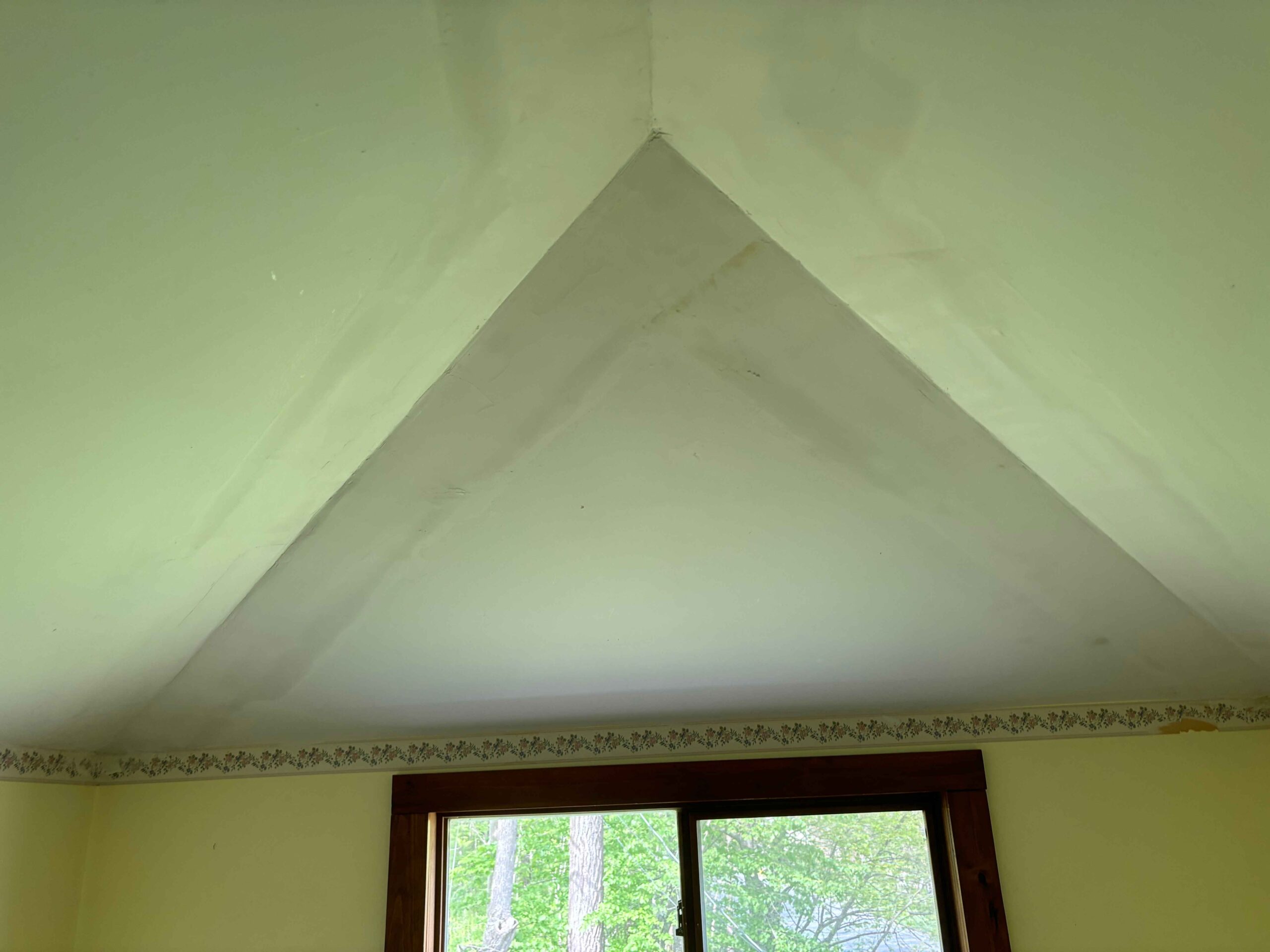
A lot of homeowners look at a water stain and ask the same question:
Does this just need repair, or does the drywall actually need to be replaced?
The answer depends on more than the stain itself.
Sometimes drywall gets wet, dries out flat, and is still solid enough to save.
Other times, the water damage goes deeper. The drywall softens, weakens, and loses its strength — even after it looks dry again.
That is when replacement usually makes more sense.
First Test: Push on It
One of the first things I do is simple:
I push on it.
Is it moving?
If it is, the next question is why.
Sometimes movement means the drywall is still basically sound, but it needs to be pulled back tight with screws and then repaired properly with tape and compound.
Other times, the drywall is dry on the surface but soft underneath. It has gone weak from staying wet too long. When that happens, it may feel mushy, powdery, or just no longer solid.
At that point, it is not just a repair issue anymore. The material itself has lost its strength.
Short-Term Water vs. Long-Term Water
Not every wet area ends the same way.
If drywall got wet over a short period of time and dried out flat, there is a chance it can still be repaired instead of replaced.
But if the leak went on for a while, the drywall often starts to break down. It can turn soft, weak, or chalky. Once that happens, it is no longer structurally sound enough to trust.
That is usually when replacement is the better call.
Second Test: Knock on It
Another thing I do is knock on the damaged area and compare it to a nearby section that I know is still good.
Does it sound different?
Does it sound weaker, hollower, or less solid?
That can tell you a lot.
I use the same basic method when checking damaged corner bead. Sometimes a section may not look terrible at first glance, but when you tap along it, you can hear where it has let go from the surface underneath.
That difference in sound often tells the story before the eye does.
It’s Not Just About What It Looks Like
This is where homeowners can get misled.
A water stain may not look that bad. The surface may even feel dry. But if the drywall underneath has gone soft or weak, patching over it is not the right answer.
On the other hand, not every stained area automatically needs to be cut out either.
The real question is whether the drywall is still solid.
That takes a little diagnosis.
The Goal Is to Repair What Can Be Saved — and Replace What Can’t
At Fast Patch Drywall Repair, the goal is not to replace more than necessary.
It is to figure out what is still sound, what is not, and what will actually hold up.
Sometimes that means screws, tape, and finish work.
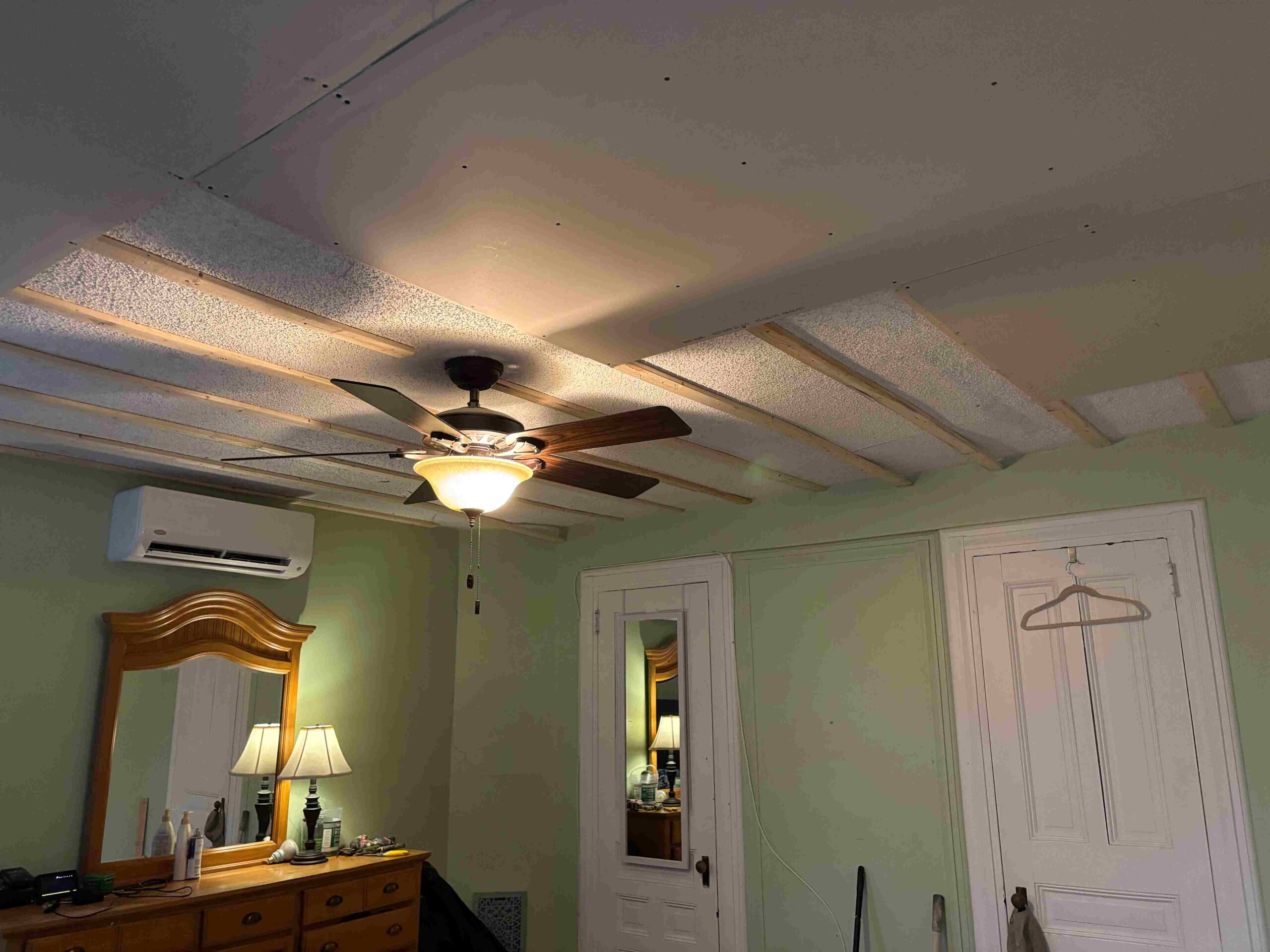
Sometimes it means cutting out damaged sections and replacing them properly.
The key is knowing the difference before you start.
Not Sure Which One You’ve Got?
If you have a stained ceiling or wall and you are not sure whether it just needs repair or full replacement, send a few photos and a short description.
Call or Text Chris: 845-751-8537
Email: fastpatch1@gmail.com