
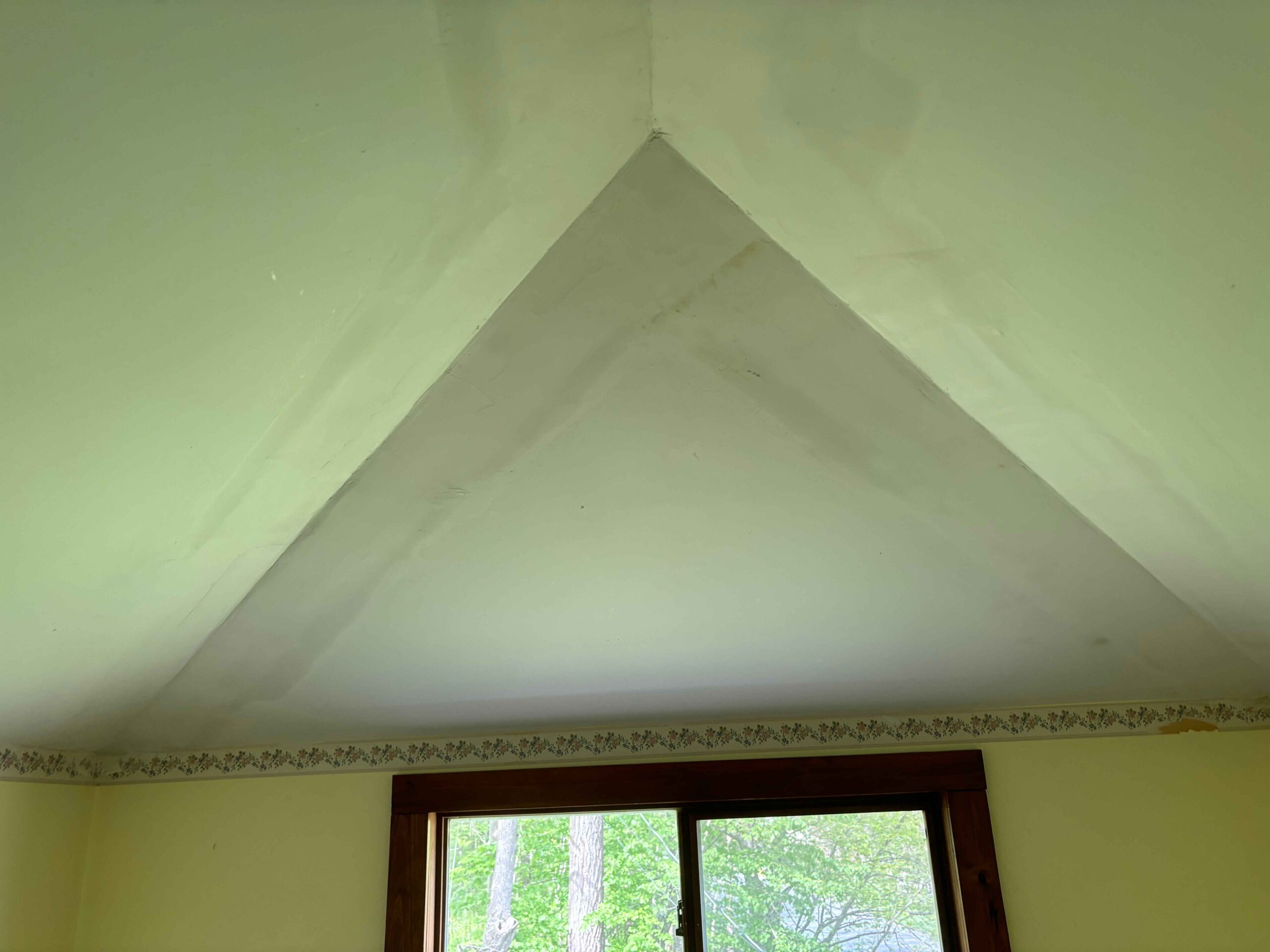
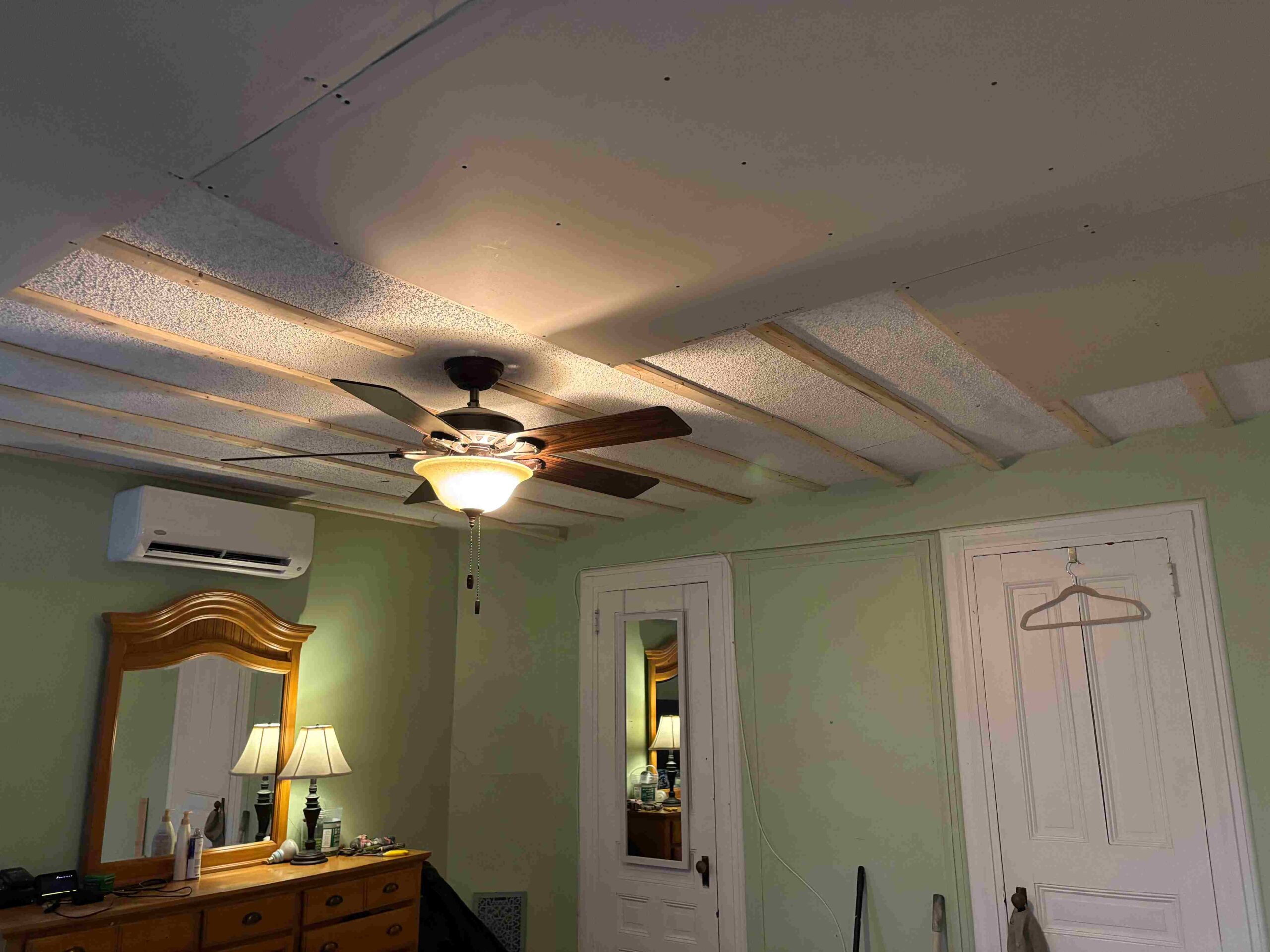
There is a water stain on your ceiling. The leak has been fixed, and now you are wondering how much repair work you are facing.
Does the damaged area need to be cut out? Or can the existing drywall be saved?
The stain alone does not answer that question. Some drywall can remain in place after limited exposure to clean water, provided it has dried promptly and thoroughly and remains sound. Other water-damaged drywall needs replacing. American Gypsum
I’m Chris, the owner of Fast Patch Drywall Repair. I help Bergen County homeowners work out which kind of repair they need—without automatically turning every ceiling stain into a replacement job.
First, Make Sure the Water Problem Has Been Addressed
Before deciding how to finish the surface, the source of the water needs to be identified and stopped. The affected area also needs proper drying and assessment. A surface that looks dry is not enough, by itself, to establish that everything is ready for repair. American Gypsum
When you contact me, explain what caused the damage, whether the leak has been fixed, and what cleanup or drying has already been done.
That background is part of understanding the job—not just an extra detail.
Is the Drywall Loose, or Is the Material Itself Weak?
When I inspect an area that is safe to check, I look at whether the drywall feels firm and whether it moves.
Then I want to know why it moves.
Sometimes the board is still sound, but it needs to be secured properly before the seams and surface are repaired. That is different from drywall that has softened or started breaking apart.
If the material is no longer sound, covering it with compound does not restore its strength. The damaged section needs to be removed rather than hidden under a fresh finish. Physical damage and separating paper are among the reasons water-exposed board may need replacement. American Gypsum
These are checks I make during an inspection—not a recommendation to push on a wet, bulging, or sagging ceiling.
Sometimes I Learn Something by Listening
Another check I use is gently tapping the area and comparing it with a nearby section that appears sound.
A difference in sound can give me a reason to investigate further. I use a similar comparison when checking whether a section of corner bead has loosened.
But tapping is a clue, not a complete diagnosis. I do not decide that a water-damaged ceiling is fine simply because one spot sounds solid. The repair decision needs to account for the damage and the history of the leak as well.
The Source of the Water Matters, Too
A small clean-water leak and a sewage backup are not the same situation.
Drywall exposed to sewage or floodwater needs replacement; simply letting it dry and checking whether it feels firm is not an adequate approach. Suspected contamination or mold also needs appropriate assessment before ordinary patching and finishing begin. Gypsum Association
My role is repairing the walls and ceilings after the necessary cleanup and drying—not covering up an unresolved water problem.
Save What Is Sound. Replace What Isn’t.
I do not want to remove good drywall unnecessarily. I also do not want to leave weak material underneath a repair just to make the job look smaller.
Sometimes the appropriate work is securing the existing board, repairing the seams, and refinishing the surface. Sometimes it means cutting out damaged material and installing a properly supported patch.
The important part is making that decision before the finishing starts.
Not Sure What Your Stained Wall or Ceiling Needs?
Call or text Chris at 201-822-5593.
Send a close-up photo, another photo showing the surrounding area, your town, and a brief description of what happened. Mention whether the leak has been fixed and whether the area has been repaired before.
Photos are a useful starting point. When the condition underneath is uncertain, an in-person assessment may be needed before deciding what can stay.
Email: fastpatch1@gmail.com