
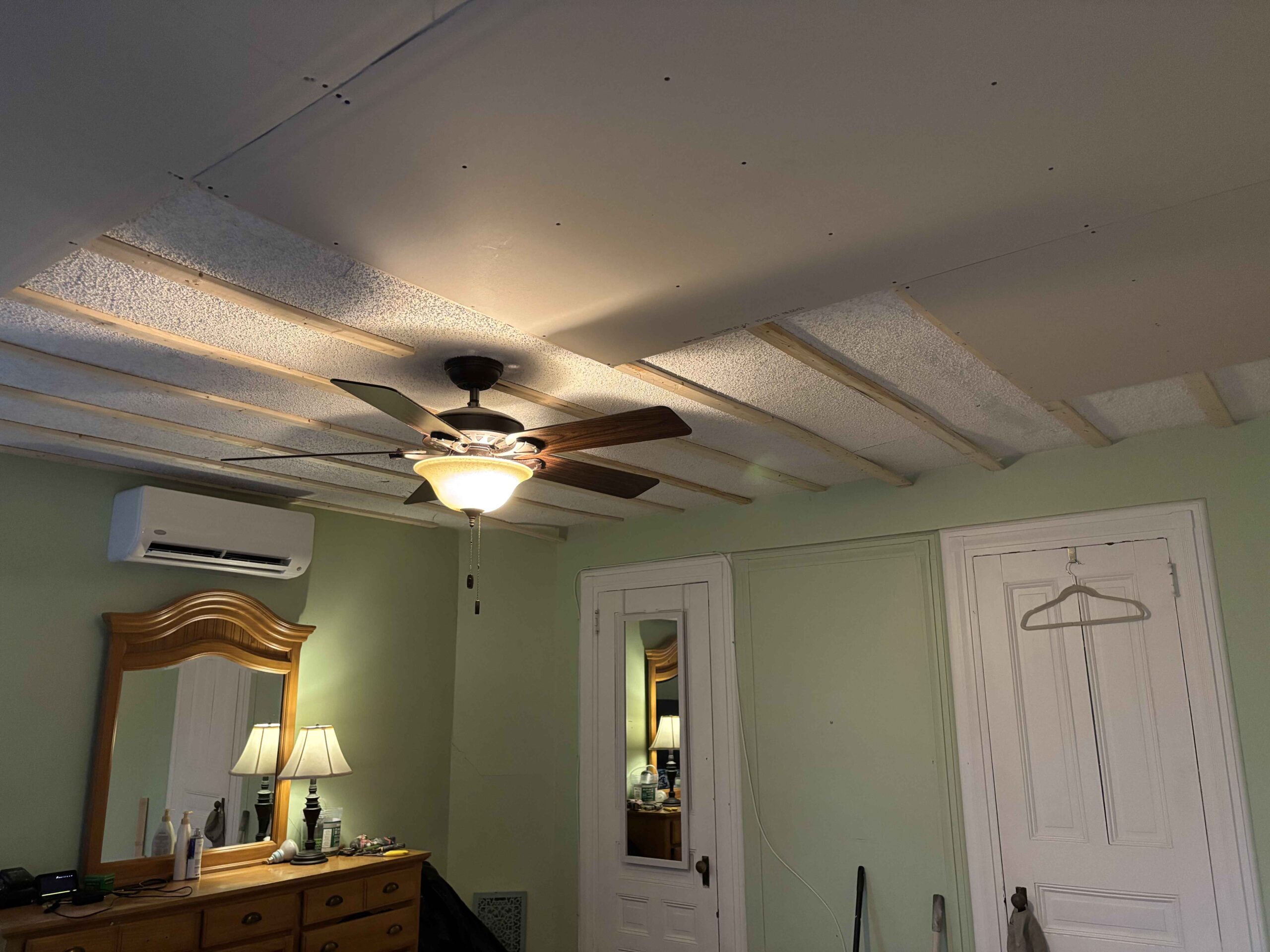
You have a crack in the ceiling or a damaged wall, and you are trying to explain what needs fixing.
Is it plaster? Drywall? Sheetrock?
You do not need to know the correct name before calling me. But identifying the material and how it is attached is part of deciding what the repair should involve.
I’m Chris, the owner of Fast Patch Drywall Repair. I help Bergen County homeowners with wall and ceiling repairs, including older plaster and modern drywall.
Drywall and Sheetrock Usually Mean the Same Thing
Drywall is the general term for gypsum wallboard. Sheetrock is a USG brand of drywall—not an entirely different wall system. USG
So when you ask for a “Sheetrock repair” instead of a “drywall repair,” you are generally describing the same kind of work.
Plaster is where the distinction becomes more important.
Plaster Is More Than a Different Surface Finish
Traditional plaster was applied wet over a supporting base. Depending on the construction, that base may be wood lath, metal lath, or gypsum lath, sometimes called rock lath. It is not simply ordinary drywall with a different name. National Park Service
With wood lath, wet plaster pushes through the gaps between narrow wood strips. It hardens into projections called keys, which help hold it in place. When those keys break or the support becomes loose, the damage can extend behind the painted surface. National Park Service
That is why my first question is not just, “How long is the crack?” I also want to understand what is happening around and behind it.
A Surface Repair Cannot Replace Proper Support
Loose plaster needs sound support before finishing. Where fastening is appropriate, plaster washers help spread the holding pressure. If the lath itself is loose, attaching plaster to it does not solve the underlying problem. Reinforcing and coating the surface comes afterward—not instead of securing it. Fast Patch Drywall
When discussing your repair, I want you to understand which part of the work addresses the damage and which part produces the finished appearance.
Those are connected, but they are not interchangeable.
A Sagging Ceiling Needs More Than Cosmetic Attention
A small crack does not automatically mean a ceiling is about to fall. However, plaster that is separating overhead presents a different concern from a blemish in an otherwise secure surface. The surrounding ceiling needs assessment, not just the visibly damaged spot. National Park Service
Do not push on or disturb a visibly sagging or loose ceiling to test it. Keep people away from the area underneath and arrange a professional assessment.
When you contact me about ceiling damage, mention any sagging, falling pieces, recent changes, or history of water damage.
Sometimes Repair Is Right. Sometimes the Whole Ceiling Needs a Plan.
Localized damage can often be repaired when the surrounding plaster and its support remain sound. Extensive deterioration may require a broader approach. National Park Service
For a larger ceiling project, I may discuss removal and replacement, or—where the existing ceiling can safely remain—new drywall over furring strips secured through to solid framing. Covering a suitable ceiling can reduce demolition, but it is not permission to conceal an unsafe one. Fast Patch Drywall
I would rather explain those choices before quoting than offer a small patch without considering the rest of the ceiling.
The questions I want to settle are straightforward: What can we reasonably save? What needs replacing? And what will each option mean for the room?
Remember the Edge Where the Ceiling Meets the Walls
With some ceiling replacements or overlays, a small cove molding can provide a neat perimeter and may avoid disturbing or repainting all the walls. It is an option to discuss, not a requirement for every room. Fast Patch Drywall
Let me know whether preserving the existing wall paint is important to you. That belongs in the conversation before the work begins.
Need Plaster or Drywall Repair in Bergen County?
Call or text Chris at 201-822-5593.
Send photos, your town, and a brief description of the problem. Include a wider view of the wall or ceiling along with the close-up, and mention any previous repairs or leaks.
You do not have to identify the material yourself. We can start with what you are seeing and discuss the next step.