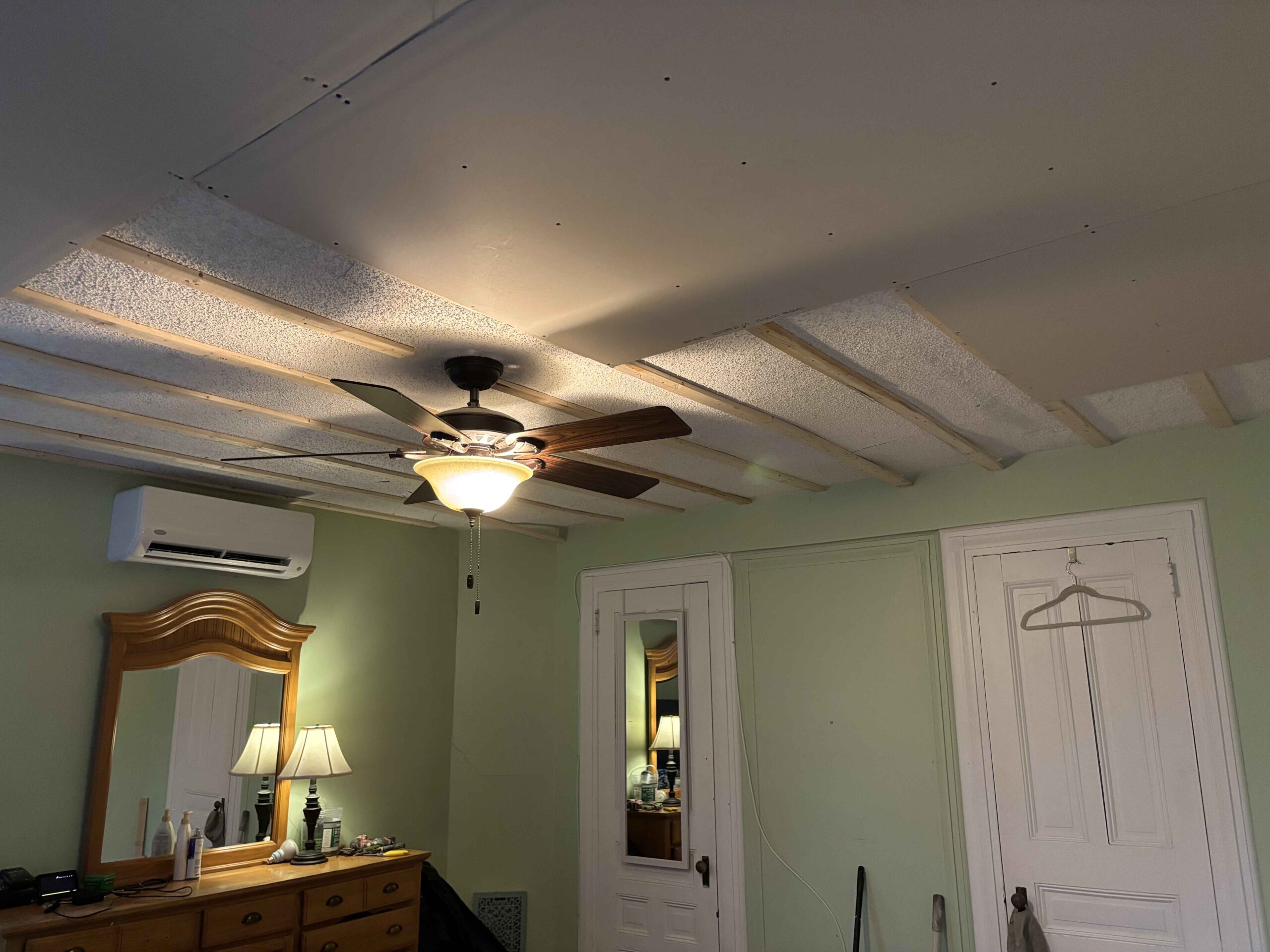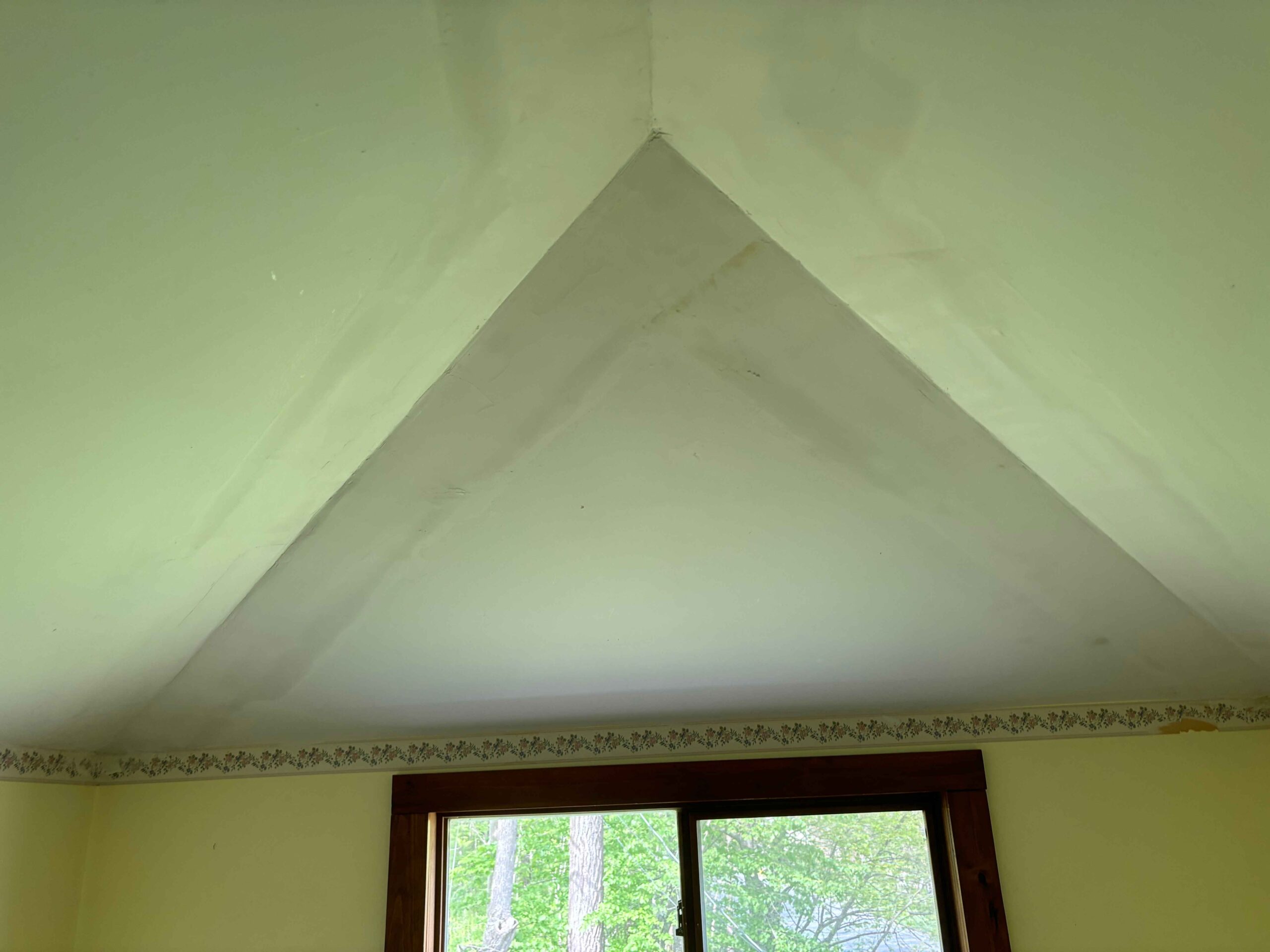
Drywall cracks, nail pops, screw pops, and inside corner tape failure do not usually show up for no reason.
A lot of homeowners see a crack above a door, a window, or an inside corner and assume the drywall was installed wrong. Sometimes poor workmanship is the problem. But very often, the original drywall may not have been installed wrong at all.
It may have been installed when the wood framing behind it was a different size than it is now.
That is an important difference.
## The Framing Behind the Drywall Can Change
Wood framing does not shrink equally in every direction.
An 8-foot wall stud will usually still be about 8 feet tall. Your wall does not suddenly become shorter. But the thickness and width of that same framing lumber can shrink as it dries.
For example, a 2×4 that is about 3 1/2 inches wide can shrink closer to 3 1/4 inches across that dimension as the wood dries out.
That may not sound like much, but behind drywall, that movement matters.
Drywall, screws, nails, tape, and inside corners were all installed when the framing was at one thickness. After the house dries out, the framing may be slightly different. That can change the pressure behind the drywall, loosen fasteners, stress taped joints, and create cracks or pops that show up on the finished wall or ceiling.
## Most of This Happens Early in the Life of the House
Framing lumber is allowed to contain a certain amount of moisture when it is used to build a house. In many cases, that lumber continues to dry after the home is built.
Once the heat is on and the house goes through its first heating season, the framing dries further. That is when a lot of the shrinkage happens.
This does not usually mean the house will keep shrinking forever. Most of the movement from drying framing happens early. That is actually good news.
It means that if the problem is repaired correctly after the framing has already dried and settled, the repair has a much better chance of lasting.
## Why Cracks Often Show Up Above Doors and Windows
Doors and windows are common places for drywall cracks because the framing changes around those openings.
Above a door or window, there is usually a header. On the sides, there are king studs, jack studs, and other framing members. These pieces can dry, shrink, and move differently than the surrounding wall framing.
That movement can transfer through the drywall.
On a finished wall, you do not see the framing. You only see the crack, tape failure, screw pop, or nail pop. But the cause may be hidden behind the surface.
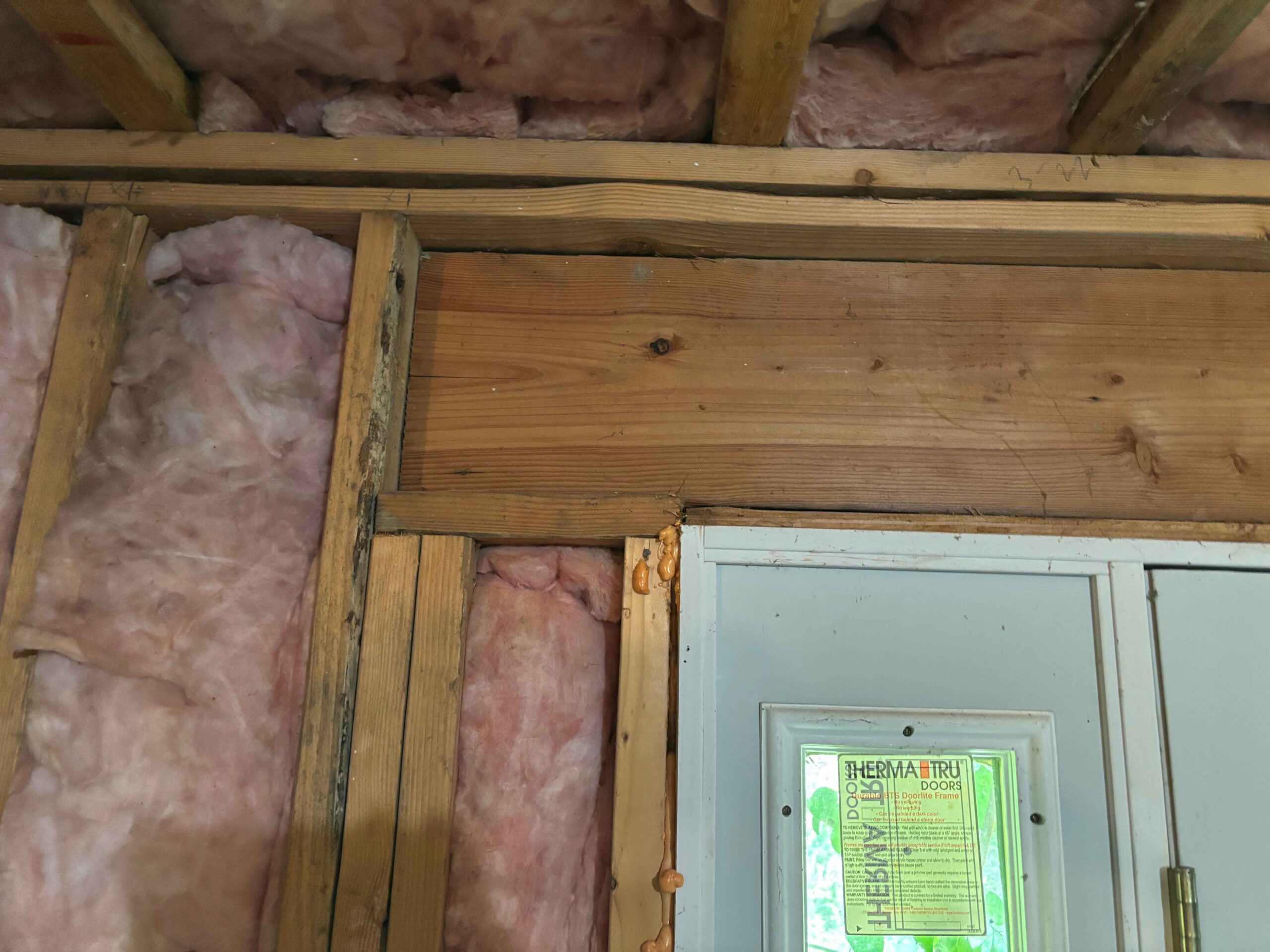
This exposed basement wall shows framing around an exterior door opening. On a finished wall, this framing would be hidden behind drywall, but movement in this area can later show up as cracks, screw pops, nail pops, or tape failure.
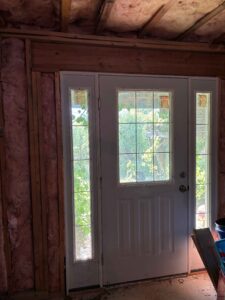
A closer look at the header area. Framing movement around openings is one reason cracks often appear above doors and windows.
## Why Spackling Over It Does Not Fix the Real Problem
Spackle can hide a crack for a while. Paint can make it look finished again.
But if the drywall is loose, the fastener has popped, or the tape has failed, spackle alone does not fix the cause.
It does not tighten the drywall back to the framing.
It does not reset a popped screw or nail.
It does not reattach loose tape.
It does not correct movement in the problem area.
That is why some cracks come back after being “fixed.”
The visible crack is only the symptom. The repair has to address what caused the symptom.
## The Drywall Was Not Necessarily Installed Wrong
This is where many homeowners get confused.
A screw pop or tape crack does not always mean the original drywall installer did a bad job.
The drywall may have been installed properly at the time. But it was installed when the framing behind it was at a different thickness.
After the framing dried and shrank across its width, the drywall may no longer be held as tightly in certain spots. That can cause nail pops, screw pops, corner cracks, or loose tape.
So the better question is not always, “Who did it wrong?”
The better question is:
Why did it fail, and what has to be fixed now?
## How a Better Repair Is Done
A lasting repair is not just putting more compound over the crack.
In problem areas, the drywall may need to be re-secured to the framing as it sits now. That means adding screws where needed so the sheetrock is tight again.
If the tape has failed, cracked, bubbled, or separated, that tape may need to be removed and redone. Covering loose tape with more compound is usually just hiding the problem.
A proper repair may include:
* checking the failed area
* re-screwing loose drywall where needed
* removing failed or loose tape
* retaping the joint or inside corner
* coating the repair in layers
* sanding and blending the area
* painting when needed
Once the drywall is tight to the framing again and the failed tape is replaced, the repair has a much better chance of staying fixed.
## Can Drywall Cracks and Nail Pops Be Fixed So They Do Not Come Back?
In many cases, yes.
If the framing shrinkage already happened years ago, the house is no longer going through that first major drying period. That means the repair can often be made to the condition the house is in now.
That is the key.
The repair should not just cover what you see. It should address why the crack, nail pop, screw pop, or tape failure showed up in the first place.
When you do not know why the damage happened, you are guessing.
When you understand the cause, the repair makes sense.
## Need Help With Drywall Cracks, Nail Pops, or Tape Failure?
Fast Patch Drywall Repair handles drywall, sheetrock, plaster, ceiling, and repair work in existing homes.
If you have cracks above doors or windows, nail pops, screw pops, failed tape, bad previous repairs, or drywall that keeps cracking after being patched, send a few photos and a brief description.
In many cases, we can give you a practical next step by text or email before scheduling the repair.