
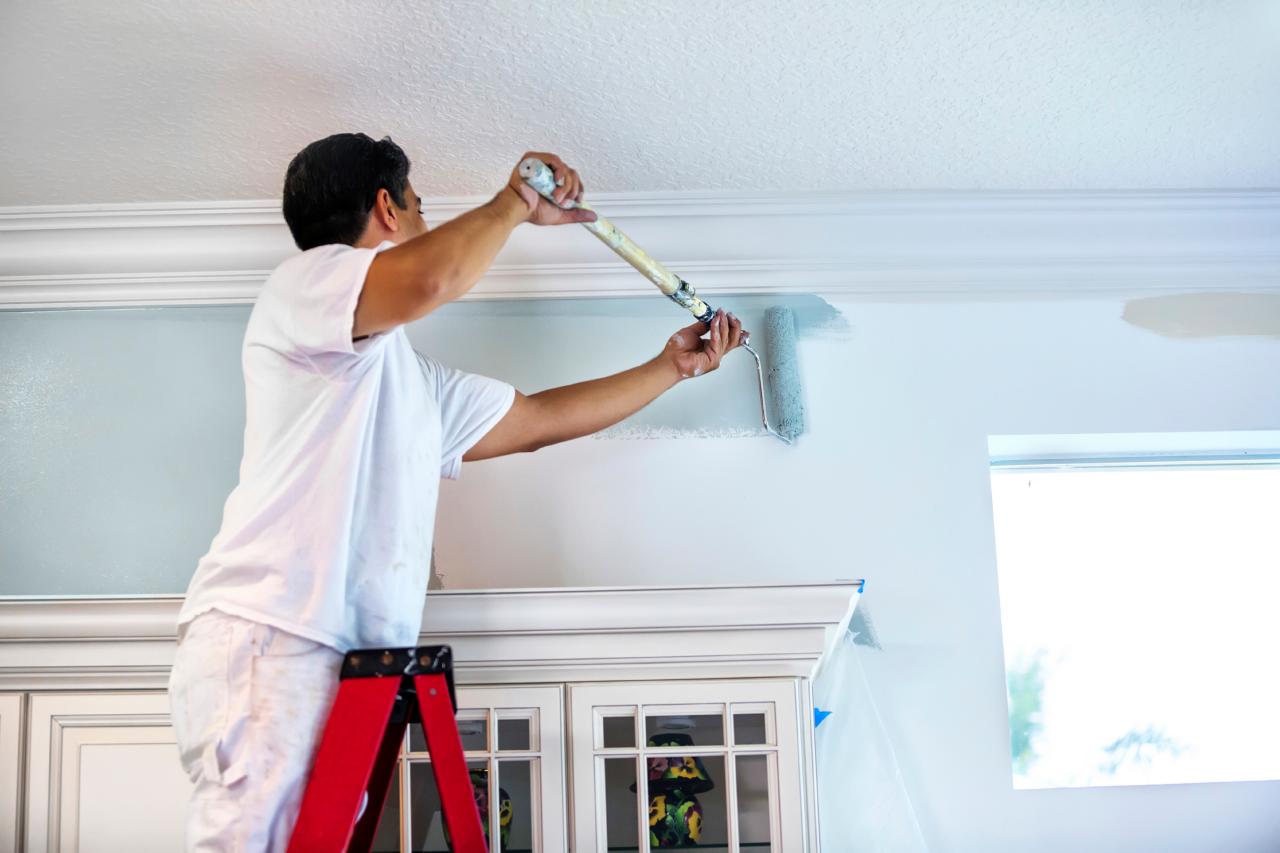
Why You Should Paint a Drywall Repair Soon After It’s Finished
A drywall repair may look finished once it has been taped, coated, sanded, and smoothed.
But until it has been properly primed and painted, the surface is still more vulnerable than the surrounding painted wall or ceiling.
That is especially important in rooms where moisture or steam are common.
Unpainted Joint Compound Is Vulnerable to Moisture
Joint compound and many common spackling materials are water-sensitive.
That is useful while working with them, but it also means the finished repair should not be left unprotected for a long period in a damp environment.
Repeated exposure to steam or condensation can soften or affect an unpainted repair.
Bathrooms Are a Good Example
If a drywall repair is completed in a bathroom and left unpainted, hot showers can create a lot of steam and moisture.
Over time, that moisture can affect the exposed joint compound.
That does not mean one shower will ruin a repair, but leaving unfinished compound exposed for an extended period is not a good idea.
Once the repair is dry, it should be primed and painted.
Kitchens Can Have the Same Problem
Kitchens can also produce a surprising amount of moisture.
Boiling water, steaming food, and normal cooking can increase humidity around walls and ceilings.
If there is an unfinished drywall repair nearby, it is better to protect it with primer and paint once the compound has fully dried.
Paint Does More Than Add Color
Paint is not just cosmetic.
Primer and paint help seal and protect the finished repair.
They also make the surface easier to clean and help it perform more like the rest of the wall or ceiling.
A repair that is left unfinished can also absorb dirt, grease, moisture, and stains more easily.
Water Sensitivity Can Also Make Cleanup Easier
The same water sensitivity that makes unfinished joint compound vulnerable can also make cleanup easier.
If you accidentally get a little compound on a finished floor, trim, or painted surface, it can often be cleaned up fairly easily with a damp sponge before it has fully hardened.
That is one reason it is worth checking the surrounding area carefully before leaving the job.
Small splatters are much easier to deal with right away than after they have been sitting for days.
Let the Repair Dry Before Painting
A drywall repair should not be painted before the joint compound is fully dry.
Drying time depends on the amount of material used, room temperature, humidity, airflow, and the type of compound.
Once the repair is dry and properly sanded, primer should usually be applied before the finish paint.
Primer helps seal the repair and reduces the chance of flashing, where the repaired area looks different from the rest of the wall.
Do Not Rush the Paint Coats
Another mistake is rushing the painting once the repair has been finished.
I have had customers push to get the painting completed as quickly as possible, and if the second coat of paint is applied before the first coat has dried properly, it can create problems.
Fresh paint can still be soft underneath even when the surface looks dry. Applying another coat too soon can pull or lift the first coat of paint, and on a fresh drywall repair it can sometimes disturb some of the joint compound underneath as well.
That can turn a finished repair back into something that needs touch-up work.
The safest approach is to let the repair dry fully, prime it properly, and then allow each coat of paint enough time to dry before applying the next one.
The exact drying time depends on the paint, temperature, humidity, airflow, and how heavily the paint was applied, so it is better to follow the paint manufacturer’s recoat time than to rush it.
That would fit very naturally right before the “Bottom Line” section.
The Bottom Line
A drywall repair is not really finished when the sanding is done.
Until it has been primed and painted, the joint compound is still exposed.
That matters most in bathrooms, kitchens, laundry rooms, and other areas where moisture or steam are common.
If you are not planning to paint immediately, keep the area as dry as practical until the repair can be sealed and finished.