
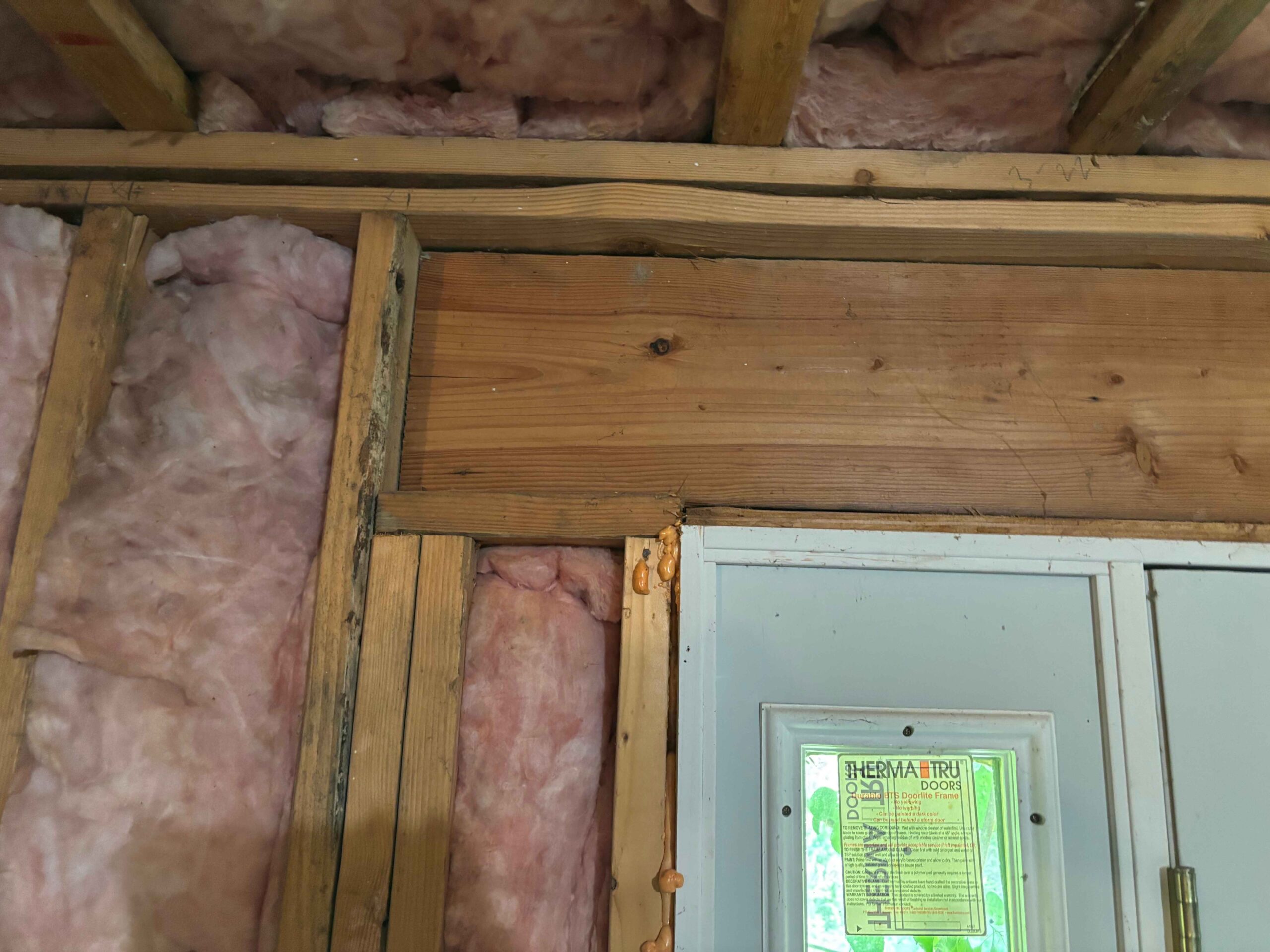
You have a crack above a doorway, a little bump on the ceiling, or tape separating in an inside corner. Someone patches it, paints it, and everything looks better.
Then the same spot shows up again.
Before covering it another time, it is worth asking what changed underneath the finished surface.
I’m Chris, the owner of Fast Patch Drywall Repair. I help Bergen County homeowners with drywall cracks, nail pops, screw pops, and failed seams—including areas that have already been patched without solving the problem.
The Wood Behind Your Drywall Can Change Size
Wood framing can shrink as it dries, but it does not shrink equally in every direction.
An eight-foot stud generally changes very little along its length. Its width and thickness can change more noticeably. The amount depends on the wood and how much moisture it loses. USFS Research & Development
That matters because the drywall was attached to the framing at an earlier point in that drying process.
As the wood shrinks, a gap can develop between the board and the framing. The drywall may no longer be held firmly in place, and a nail or screw head can become visible through the finished surface. PABCO Gypsum
Sometimes the problem is poor fastening. Sometimes the framing changed after the drywall was installed. The repair should account for the difference.
Why Problems Can Appear After the Heat Goes On
New framing can continue drying after a house is enclosed and occupied. Nail pops that develop during the heating season are often associated with that drying and shrinkage. Repair timing matters when the lumber is still changing. Drywall Finishing Council
In an older home, that initial drying may have happened years ago. However, wood can still respond to seasonal changes in moisture, so an older house is not automatically a house that never moves. USFS Research & Development
When we discuss a repair, it helps to know whether the problem has stayed the same for years, recently appeared, or seems to return at a particular time of year.
Why Cracks Appear Around Doors and Windows
Openings interrupt an otherwise continuous wall, and the framing around them includes different pieces serving different purposes.
Movement in that area can show up as a crack extending from a corner of the opening. Other movement-related cracks can develop along drywall joints or where walls and ceilings meet. Drywall Finishing Council
The location gives me something to investigate. It does not, by itself, tell me that every crack needs the same repair.
Spackle Does Not Tighten Loose Drywall
A coating of compound can improve the appearance of a damaged spot, but it does not secure a loose sheet to the framing or reattach tape that has separated.
That is why I check the condition of the area before deciding how to finish it. Otherwise, the new surface may be sitting on the same loose material that caused the earlier repair to fail. Fast Patch Drywall
The finishing belongs at the end of the repair—not in place of the repair.
What I Look to Correct Before Finishing
For a nail or screw pop, the work may involve securing the drywall firmly against the framing with an additional, properly installed fastener. The protruding fastener also needs attention, and loose material needs to be removed before the surface is refinished. Simply covering the bump skips those steps. PABCO Gypsum
For a failed seam or inside corner, I check whether the tape needs removing and replacing and whether the board itself needs securing.
Once the underlying preparation is complete, I can rebuild the finish in coats and blend the repair into the surrounding surface. Fast Patch Drywall
Repair the Condition That Exists Now
My goal is not to assign blame to whoever installed the drywall. It is to understand what needs correcting today.
I also do not promise that additional screws and fresh tape will solve every kind of building movement. When something beyond the surface repair needs attention, I want that understood before the finishing begins.
A useful repair starts with an explanation of the problem—not just a promise to make it disappear.
Need Help With Recurring Drywall Cracks or Fastener Pops?
Call or text Chris at 201-822-5593.
Send a close-up photo, another showing the surrounding wall or ceiling, your town, and a brief description. Mention whether the spot has been repaired before and how long the problem has been there.
I’ll review the information and help you figure out the next step.